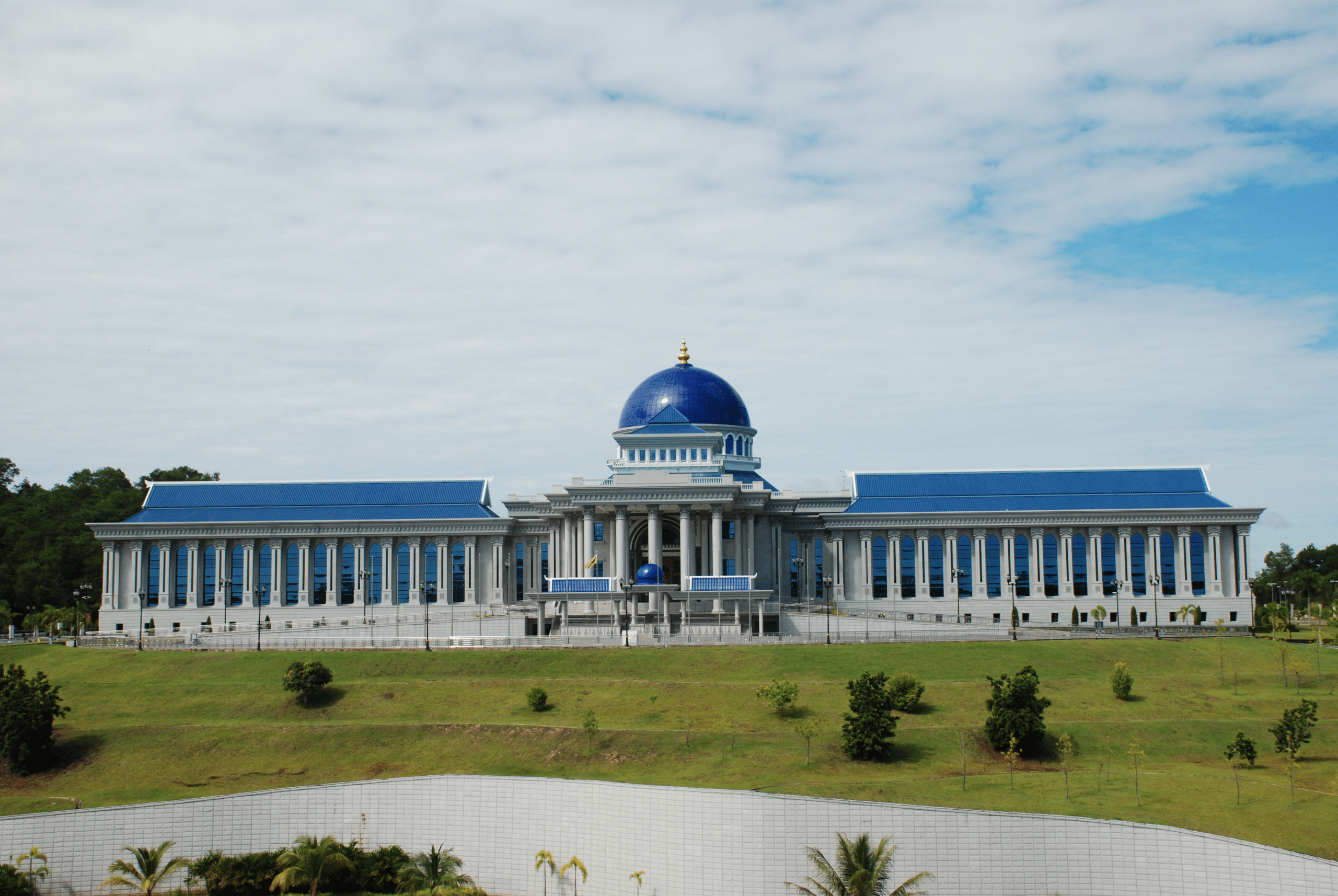
The government has tabled a budget of BND6.3 billion for the fiscal year 2026/2027, with an anticipated deficit as the nation navigates a challenging global environment while pursuing the long-term goals of Wawasan Brunei 2035.
At the 22nd Legislative Council Session, the Second Minister of Finance and Economy, Yang Berhormat Dato Seri Setia Dr Hj Mohd Amin Liew Abdullah, said that the proposed budget is framed within the context of continuing the government’s efforts to realise Wawasan Brunei 2035.
He emphasised that the country faces an increasingly challenging global landscape, influenced by geopolitical tensions, shifts in global trade, modest growth prospects and the impacts of climate change. Therefore, the budget places special emphasis on a sustainable fiscal agenda, ensuring that public spending is managed more efficiently, with high impact and an orientation towards results.
The minister outlined that the BND6.3 billion budget is proposed to finance the country’s expenditure according to the following categories:
- BND2.31 billion for emoluments, covering salary payments, service benefits, other facilities and employer contributions.
- BND2.45 billion for the recurrent expenditure of government ministries and departments.
- BND480 million for development projects under the 12th National Development Plan (RKN 12), for which the total plan price stands at BND4 billion.
The remaining allocation is for acknowledged expenditure.
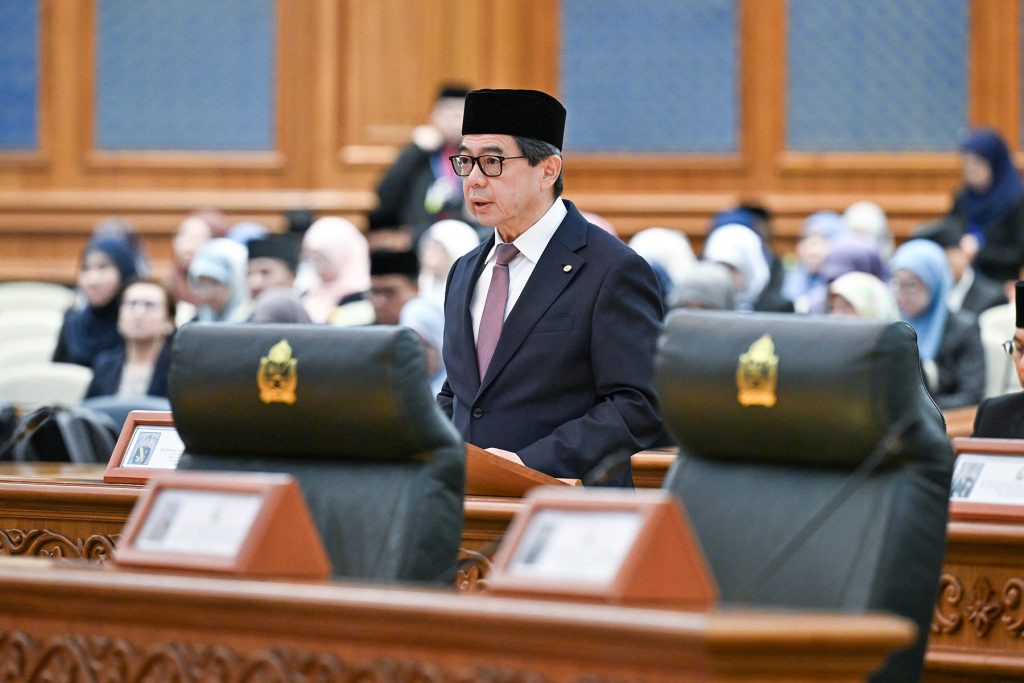
Based on initial estimates of government revenue and expenditure, the minister stated that the government is expected to record a budget deficit for the financial year 2026/2027. He further contextualised this by revealing the fiscal outcomes from the closure of accounts for FY 2024/2025.
The government recorded revenue collections of BND3.53 billion, a decrease of 4.4 per cent compared to BND3.69 billion in FY 2023/2024. Expenditure increased by 2.2 per cent to BND6.25 billion from BND6.11 billion in the previous year. As a result, for FY 2024/2025, the government recorded a budget deficit of BND2.72 billion.
The minister noted that the projected deficit for FY 2026/2027 will be updated to take into account current developments, including the country’s oil and gas production levels, global oil and gas prices, the US dollar exchange rate, revenue from the non-oil and gas sector and actual government expenditure. He stressed the need for prudent spending and prioritisation, focusing on expenditure that can provide spin-offs for the national economy.
“This situation reminds us to be more careful, to choose priorities carefully, to re-evaluate less effective programmes and to ensure that spending is focused on things that are truly needed by the people and the country,” he said.
He added that the deficit will be managed prudently through spending controls, improvements in non-oil and gas revenue and continuous measures to increase expenditure efficiency, as part of the ongoing Fiscal Consolidation Programme. The ministry is currently formulating Fiscal Consolidation Programme 2.0 with a more structured approach and clearer targets to control expenditure growth, improve operational efficiency and strengthen non-oil and gas revenue.
A Decisive Decade: ‘Together Achieving Wawasan Brunei 2035’
For the next five years, starting from FY 2026/2027 until 2030/2031, the minister announced the budget theme as “BERSAMA MENJAYAKAN WAWASAN BRUNEI 2035” or “TOGETHER ACHIEVING WAWASAN BRUNEI 2035.” He described this period as a decisive phase and the final decade that will shape the country’s direction towards Wawasan Brunei 2035.
“This theme is set for the next five years because this is the decisive phase or the final decade that will shape the direction of the country towards Wawasan Brunei 2035,” he said. “During this period, whatever fiscal decisions and investments we make must be a catalyst for the nation’s development momentum.”
The theme focuses on three new priorities:
- Firstly, strengthening fiscal stability and financial governance
- Secondly, empowering the economy through transformation and innovation
- Thirdly, ensuring social sustainability and future development

Economic Context and Performance
The minister shared several key macroeconomic indicators to reflect the current state of the national economy. The country’s Gross Domestic Product (GDP) for 2025 recorded an increase of 0.7 per cent year-on-year, primarily driven by a 3.1 per cent growth in the oil and gas sector. The non-oil and gas sector recorded a decrease of 1.5 per cent, influenced by declines in several key sub-sectors including finance and manufacturing.
However, he highlighted that between 2015 and 2025, the non-oil and gas sector recorded an average increase of 2.7 per cent per annum. In 2025, this sector continued to contribute more to GDP than the oil and gas sector, accounting for 54 per cent of the total, with priority sectors contributing 43 per cent of the entire non-oil and gas GDP. Furthermore, the non-oil and gas sector has been the main contributor to export value since 2021, accounting for 61 per cent of the country’s total exports in 2025.
The country maintained a trade surplus of BND5.1 billion in 2025, while the inflation rate remained low and stable with a decrease of 0.3 per cent, supported by government subsidies and price controls.
Empowering the Economy
Under the second budget priority, the minister detailed numerous initiatives to diversify the economy, focusing on five priority sectors: downstream oil and gas, food, tourism, ICT and services.
Key highlights included the upcoming second phase of the Hengyi Industries project, with an investment value of US$5 billion expected to begin operations in 2029, and the launch of new shipping services by NEXT Bahtera Maritime Sdn Bhd and Warisan Shipping Line (WSL) to enhance regional connectivity. In the food sector, he highlighted a new investment to establish the Brunei Integrated Analytical Laboratory, the first private food testing laboratory in the country, and a pilot project for commercial cattle breeding under a memorandum of understanding between PDS Abattoir Sdn Bhd and a Singaporean company.
Social Sustainability and Future Development
Under the third priority, the minister outlined allocations for key social sectors. In healthcare, funding will continue for the maintenance of BruHealth and BruHIMS, the procurement of medicines and critical disease treatment services.
He also announced the introduction of the “Skim Tabungan Anak Damit” (Infant Savings Scheme), effective 1 March 2026. Under this scheme, each newborn with specified citizenship will receive a financial contribution of BND240 credited into a special account to encourage saving from an early age and assist parents with meeting their children’s basic needs.
In education, allocations will fund scholarships, research at higher education institutions, school maintenance, meal plans, transport services, digital learning equipment and annual school needs assistance.
Facing Global Headwinds
The minister concluded by placing the budget within the context of global economic projections. Citing the International Monetary Fund’s (IMF) January 2026 World Economic Outlook, he noted that the global economy is projected to grow at a modest rate of around 3.3 per cent in 2026 and 3.2 per cent in 2027. For Brunei Darussalam, the IMF projects growth at a rate of 2.4 per cent for 2026.
“The budget we have presented is not merely about counting figures,” he said. “We are fulfilling a great responsibility and trust — the trust of the people and a trust in the sight of Allah Subhanahu Wata’ala — so that every decision made will bring real, fair and lasting benefits.”
THE BRUNEIAN | BANDAR SERI BEGAWAN